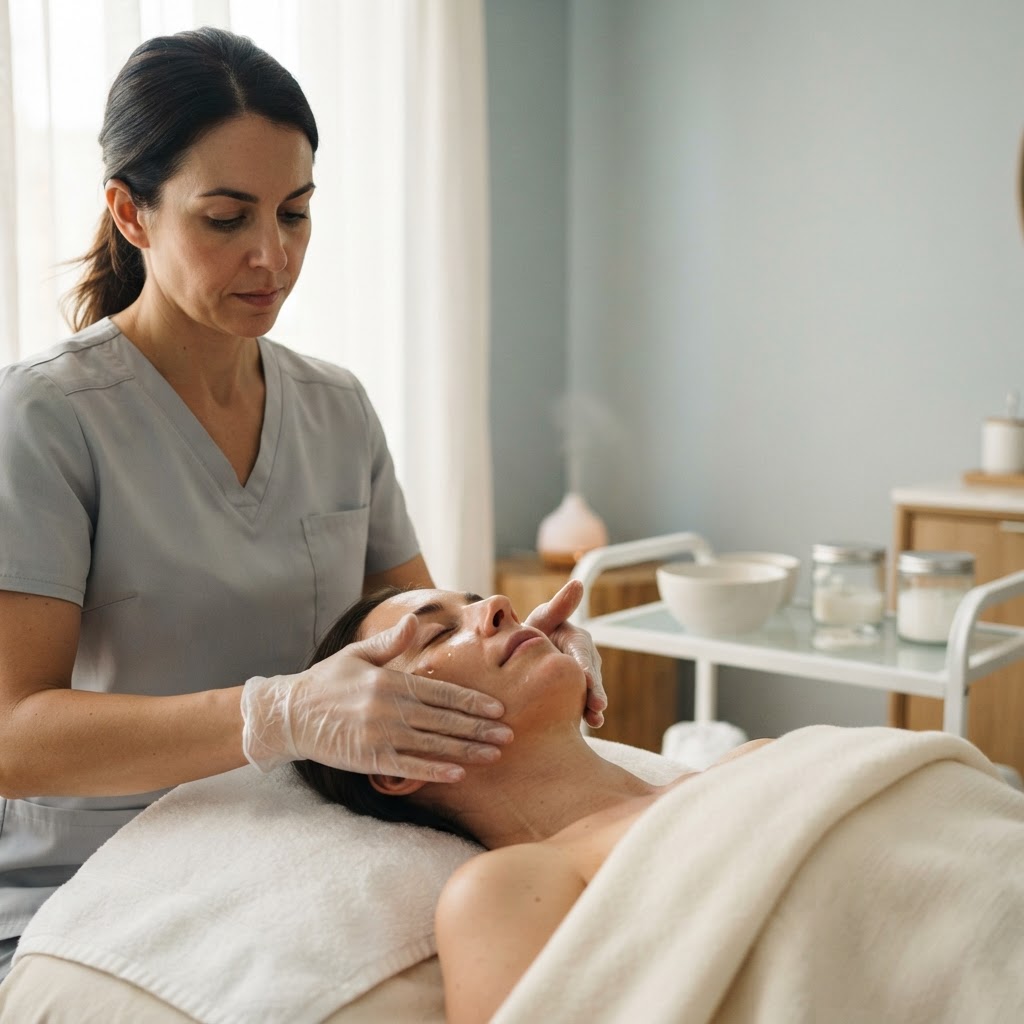
Maximising Retail Revenue: How to Train Your Spa Team for Consultative Skincare Selling
For many spa and salon owners, retail remains one of the most underutilised revenue streams in their business. Products sit neatly on shelves, clients browse briefly, and yet conversion rates stay frustratingly low. The difference between a spa that sells consistently and one that struggles often comes down to one thing: consultative skincare selling. When your team understands how to guide clients towards the right products through genuine conversation and expertise, retail stops feeling like a chore and starts becoming a natural extension of every treatment.
This approach is not about pushing sales or making clients feel pressured. It is about educating clients, building trust, and ensuring they leave with the tools to maintain and enhance their in-clinic results at home. For UK spa managers and salon owners looking to grow revenue without increasing footfall, training your team in consultative skincare selling is one of the most impactful investments you can make.
Understanding the Consultative Selling Mindset
Moving Away from Transactional Thinking
The first shift your team needs to make is a mental one. Transactional selling focuses on moving stock — it is product-led, often rushed, and clients can sense it immediately. Consultative selling, by contrast, is client-led. It begins with listening, asking the right questions, and understanding what a client genuinely needs before any product recommendation is made. This approach mirrors the professional standards your therapists already apply during treatments.
When therapists view themselves as skincare advisers rather than sales assistants, everything changes. Their confidence increases, their recommendations carry authority, and clients are far more receptive. Encourage your team to think of retail recommendations as a professional duty — prescribing the right homecare is as important as delivering an excellent facial. A client who leaves without guidance on how to maintain their results is, in many ways, being underserved.
This mindset shift also reduces the anxiety many therapists feel around selling. When the focus is on helping rather than converting, the pressure dissolves. Your team will find that genuine recommendations based on thorough skin analysis will naturally lead to retail sales without anyone feeling uncomfortable about the process.
Why Clients Need Your Guidance
Clients are overwhelmed. The skincare market is saturated with conflicting advice, influencer recommendations, and supermarket shelves stocked with products that may actively undermine professional treatments. Your clients trust your expertise — they have already demonstrated this by booking with you. That trust extends to product advice, provided your team delivers it with knowledge and confidence.
Expert Insight: Research consistently shows that clients who purchase retail products from their therapist are significantly more likely to rebook. Homecare investment deepens their commitment to their skin journey and to your business.
Helping clients understand the connection between in-clinic treatments and homecare routines is one of the most powerful things your team can do. A client who uses the right cleanser, serum, and moisturiser at home will see better results, feel more satisfied, and become a loyal, long-term client. This is the foundation of consultative skincare selling done well.
Building a Structured Skin Consultation Process
The Consultation as Your Selling Foundation
No effective retail recommendation happens without a thorough consultation. If your team is skipping or rushing the consultation stage, retail performance will always be limited. A structured skin consultation is the single most important tool in consultative skincare selling — it creates the context for every recommendation that follows. Train your team to treat the consultation as the cornerstone of every appointment, not an administrative formality.
Your consultation process should cover skin type, current concerns, lifestyle factors, existing product use, and treatment history. This information allows therapists to make genuinely tailored recommendations rather than defaulting to a generic routine. Clients who feel truly listened to during their consultation are far more open to guidance when it comes to homecare.
Introduce standardised consultation forms that prompt therapists to explore the right areas consistently. These forms also create a record of client preferences and progress, which makes future appointments more personalised and further strengthens the client relationship over time.
Asking the Right Questions
The quality of a consultation is determined by the quality of the questions asked. Train your team to use open-ended questions that invite detailed responses rather than simple yes or no answers. This encourages clients to share more, which gives therapists richer information to work with.
Effective consultation questions for retail-focused conversations include:
- "How does your skin feel throughout the day — does it get tight, oily, or uncomfortable?"
- "What does your current morning and evening skincare routine look like?"
- "Are there any specific concerns you'd really like to address over the next few months?"
- "Have you noticed any changes in your skin recently — perhaps with stress, diet, or the seasons?"
- "What results are you hoping to achieve from your treatments with us?"
These questions position your therapist as a skilled professional and naturally lead into personalised product recommendations at the end of the treatment. The transition from treatment to retail feels seamless because it is built on a conversation the client has already engaged with.
Training Techniques That Deliver Real Results
Product Knowledge as the Foundation of Confidence
Your team cannot sell what they do not understand. Thorough product knowledge is non-negotiable for consultative skincare selling, and it goes far beyond knowing ingredient names. Therapists need to understand how products work, why they work, and — crucially — how to explain this in language clients can connect with. Technical accuracy must always be balanced with accessible communication.
Regular product training sessions should be built into your business calendar. These do not need to be lengthy — even a focused 20-minute session on a single product category can dramatically improve your team's confidence. Encourage therapists to use products themselves so they can speak from personal experience. First-hand knowledge is persuasive and authentic in a way that scripted descriptions simply cannot replicate.
MONUSKIN supports its stockists with comprehensive professional education materials, making it straightforward to bring your team up to speed on the range. From active ingredients to skin-type suitability, having a skincare partner that invests in your team's knowledge is invaluable. The MONUSKIN starter packs are particularly useful here — they provide a curated introduction to the range that makes initial training structured and manageable for new team members.
Role-Playing and Scenario Practice
Knowledge alone is not enough — your team also needs practice translating that knowledge into natural, confident conversations. Role-playing is one of the most effective training methods for building retail confidence, yet it is often overlooked in salon training programmes. Set aside time in team meetings for therapists to practise recommendation scenarios with one another.
Scenario-based practice might include:
- Recommending a homecare routine to a first-time client following a skin analysis
- Responding to a client who says they already have "loads of products at home"
- Introducing a new product to a long-standing client whose skin concerns have changed
- Handling price objections calmly and professionally
- Transitioning naturally from treatment to retail conversation at the close of an appointment
Debrief after each role-play exercise to discuss what worked well and what felt stilted. Over time, these conversations become second nature and your team will carry that ease into every real client interaction.
Expert Tip: Avoid scripting retail conversations too rigidly. Clients respond to authenticity. Train your team on frameworks and key points rather than word-for-word scripts — flexibility makes conversations feel genuine rather than rehearsed.
Creating the Right Retail Environment
Merchandising That Supports the Conversation
Your physical retail space should actively support your team's consultative selling efforts. Cluttered, poorly labelled, or uninviting displays undermine even the most skilled therapist's recommendation. Clients who are directed towards a product should be able to find it easily, read about it, and feel excited by it. Your environment communicates the value of what you are selling before a single word is spoken.
Organise your retail area by skin concern or routine step rather than simply by product type. This mirrors the consultative process — a client who has just discussed their dehydration concerns should be able to look at a clearly signposted "hydration" section and immediately connect the recommendation with the product in front of them. Clear, professional point-of-sale materials from your skincare brand also reinforce the credibility of your recommendations.
Testers and tester protocols matter enormously. Ensure testers are well-maintained, clearly labelled, and that your team is comfortable guiding clients through a sensory experience with the product. Clients who smell, feel, or experience a product are significantly more likely to purchase it. This tactile element is one of the advantages a spa environment has over online retail — use it deliberately.
Tracking Performance and Celebrating Success
You cannot improve what you do not measure. Implement a simple retail tracking system that allows you to monitor individual therapist performance, identify your top-selling products, and spot trends across the business. This data should inform your training priorities and help you recognise where additional coaching is needed.
Celebrate retail success with your team — not in a pressured, target-driven way, but by acknowledging the client outcomes that result from great recommendations. Share positive client feedback about homecare products. Highlight when a client's skin has visibly improved because they have been consistent with their prescribed routine. This reinforces the purpose behind consultative selling and keeps motivation high.
Consider introducing retail incentives that reward thoughtful selling rather than volume alone. Incentives tied to client repurchase rates or consultation quality recognise the behaviours that lead to sustainable retail growth, rather than creating short-term pressure that can damage client trust.
Overcoming Common Objections
Equipping Your Team to Handle Pushback Gracefully
Even the most skilled consultative sellers will encounter objections. Preparing your team for common client responses means they can handle these moments with confidence rather than backing away from the recommendation entirely. The key is to respond with empathy and information, not persuasion tactics.
Common objections and constructive responses include:
- "It's quite expensive" — Focus on cost per use and the value of professional-grade ingredients versus high-street alternatives. Relate it to the investment the client has just made in their treatment.
- "I'll have a think about it" — Offer to put together a written recommendation they can take away, reinforcing the professional nature of your advice and keeping the door open.
- "I already have something similar" — Ask what they are currently using and explore whether it is truly addressing their concerns. This is an opportunity for education, not competition.
- "I buy my skincare online" — Acknowledge the convenience, then gently highlight the risks of counterfeit products and the value of professional guidance when selecting actives.
Training your team to see objections as openings for deeper conversation rather than rejections transforms the retail dynamic entirely. Most objections signal interest — a client who was completely uninterested would not engage at all.
Partner with MONUSKIN to Elevate Your Retail Strategy
Building a high-performing retail operation requires the right products, the right training, and the right professional partner. MONUSKIN Professional Skincare has been developed specifically for spa and salon professionals who want to deliver outstanding clinical results alongside a compelling retail offering. Our formulations are grounded in science, designed for real skin concerns, and created to complement professional treatments seamlessly.
When you partner with MONUSKIN, you gain access to more than a skincare range. Our starter packs are designed to get your team up and running quickly with a curated selection of products that cover core client needs and provide an accessible entry point into the range. We provide professional education support to ensure your therapists have the knowledge and confidence to sell consultatively from day one.
If you are ready to transform your retail performance, reduce reliance on appointment volume alone, and build a genuinely profitable skincare business, we would love to hear from you. Contact the MONUSKIN team today to find out more about our professional partnership programme, starter pack options, and education resources. Your clients deserve expert guidance — and your business deserves the revenue that comes with it.