Transitioning Salon Client Facials for Autumn: A Professional Guide to Barrier Repair
As the seasons shift and September's cooler air begins to settle across the UK, your treatment menu should be shifting alongside it. Clients who spent summer enjoying lightweight, oil-controlling facials are about to face an entirely different set of skin challenges. Central heating, brisk winds, and dropping humidity levels combine to create a perfect storm of transepidermal water loss (TEWL) and compromised barrier function. For salon owners and skincare therapists, autumn is one of the most professionally rewarding seasons to work in — provided your protocols are properly prepared.
The transition from summer to autumn skincare isn't simply about swapping a gel moisturiser for a richer cream. It represents a fundamental shift in skin physiology that demands a thoughtful, evidence-informed approach. Clients may not yet recognise what's happening to their skin; they simply know it feels tighter, appears duller, or is reacting in unfamiliar ways. Your role as a professional is to anticipate these changes, educate your clients, and position your treatment offering as the essential seasonal solution they need.
Understanding Autumn Skin Changes: What's Really Happening Beneath the Surface
Before adapting your autumn professional salon facial protocols, it's essential to understand the biological mechanisms driving seasonal skin changes. As temperatures drop, sebaceous gland activity naturally decreases, reducing the skin's natural lipid output. This means the acid mantle — that delicate protective film of sebum, sweat, and skin flora — becomes thinner and less effective at retaining moisture. The result is a skin barrier that is increasingly vulnerable to environmental aggressors.
Simultaneously, the widespread use of central heating creates indoor environments with extremely low humidity. Studies consistently show that exposure to dry, heated air accelerates TEWL dramatically, leaving even previously oily or combination skin types feeling dehydrated and sensitised. Clients who managed their skin confidently throughout summer may suddenly find themselves dealing with flaking, redness, or unexpected breakouts caused by a disrupted microbiome rather than excess oil production.
Wind is another underestimated factor in the UK autumn climate. Repeated wind exposure physically erodes the lipid layer of the epidermis, particularly around the cheeks, nose, and forehead. When you understand these compounding mechanisms, it becomes clear why a reactive, one-size-fits-all approach to seasonal facials will always fall short of delivering the results your clients expect.
Reassessing Your Client Consultation Process for the New Season
Autumn is the ideal time to revisit your consultation protocols and treat the new season as a fresh intake opportunity. Many salons make the mistake of assuming that existing client records are sufficient, but skin behaves differently across seasons, and a consultation that accurately reflected a client's skin in July may be significantly outdated by October. Introducing a brief seasonal reassessment not only improves treatment outcomes but also demonstrates the level of professional care that builds long-term client loyalty.
During this reassessment, focus your questions on recent changes in skin behaviour rather than historical concerns. Ask clients specifically about tightness after cleansing, increased sensitivity or reactivity, changes in foundation wear, or any new areas of dryness or flaking. These targeted questions will help you identify barrier dysfunction quickly and accurately, allowing you to tailor your treatment plan accordingly.
Expert Tip: Introduce a simple seasonal skin health questionnaire at reception or via email prior to the appointment. This saves valuable consultation time in the treatment room and signals to clients that your approach is thorough and professionally considered.
Consider using this reassessment as an upselling opportunity in the most client-centred sense of the term. When a client understands why their skin is changing and how your updated treatment protocol addresses those specific changes, they are far more likely to commit to a course of autumn treatments rather than a single one-off appointment.
Core Principles of Autumn Barrier Repair Facials
Effective barrier repair facials in an autumn context should follow a consistent set of therapeutic principles, regardless of the specific products used. The overarching goal is to reinforce the skin's natural protective mechanisms, reduce inflammatory responses, and restore optimal hydration levels within the epidermis. This requires a more gentle, nourishing approach than the exfoliation-led summer protocols many therapists default to.
Avoid over-exfoliation — this is perhaps the single most important adjustment to make entering autumn. Whilst exfoliation has its place in seasonal transition treatments to address surface congestion and uneven texture, aggressive mechanical or chemical exfoliation can further compromise an already-stressed barrier. Opt for enzyme-based exfoliants or very low-percentage acids used with careful attention to skin response, rather than high-strength peels applied routinely.
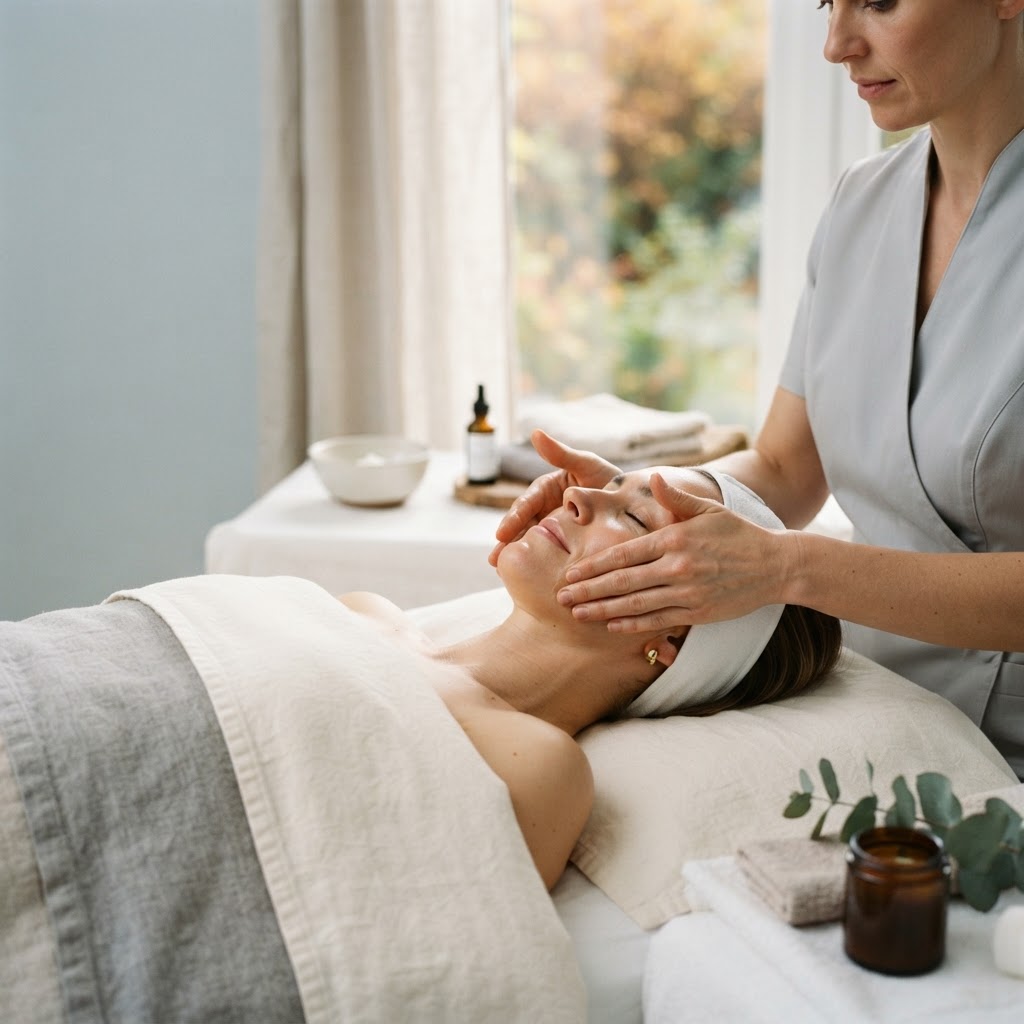
Massage techniques should also be adapted. Longer, more sustained effleurage movements that support lymphatic drainage and promote circulation are particularly beneficial in autumn, when sluggish microcirculation can contribute to that characteristic dull, lacklustre complexion. Product absorption during massage is significantly enhanced when the skin is properly warmed and receptive, making technique just as important as the actives you're delivering.
Key Treatment Objectives for Autumn Facials
When building or refining your autumn treatment protocols, keep the following objectives at the forefront of every treatment plan:
- Restore lipid balance by incorporating ceramide-rich, barrier-supportive formulations
- Reduce TEWL through the use of occlusive and humectant ingredients applied in the correct layering order
- Calm inflammatory responses using soothing actives such as niacinamide, panthenol, and botanical extracts
- Support the skin microbiome by avoiding harsh surfactants and over-stripping cleansers
- Rebalance hydration levels with hyaluronic acid formulations that draw moisture into the deeper epidermal layers
Adapting Your Treatment Menu: Practical Protocol Adjustments
Transitioning your treatment menu for autumn doesn't necessarily mean a complete overhaul. In many cases, it's about making intelligent, targeted adjustments to existing protocols that reflect the new skin environment your clients are navigating. Start with your cleansing step, which is the foundation of every facial and sets the tone for how the skin will respond throughout the treatment. Switch from foaming or gel cleansers to cream or balm formulations that cleanse thoroughly without stripping the barrier.
The masking stage of your autumn facial is a powerful opportunity to deliver concentrated barrier-repair actives. Nourishing hydrating masks containing hyaluronic acid, shea butter, oat extracts, or plant ceramides should take precedence over clay-based purifying masks for the majority of your clients during this period. Reserve purifying options for genuinely congested skin types, and even then, follow immediately with a barrier-supportive serum and cream to counteract any drying effect.
Your finishing protocol deserves particular attention in autumn. Layering a targeted hydrating serum beneath a protective moisturiser, and finishing with an SPF — which remains non-negotiable even in October — creates the multi-layered barrier support the skin needs to maintain results between treatments. Educating clients on this layering approach also supports your retail recommendations, reinforcing the connection between in-salon treatment and home care.
Recommended Protocol Structure for an Autumn Barrier Facial
- Double cleanse using a gentle balm or cream cleanser to remove SPF/make-up without stripping
- Enzyme exfoliation (optional, skin-dependent) — no more than once per fortnight for compromised barriers
- Warm towel compress to open pores gently and enhance subsequent product penetration
- Barrier repair serum rich in niacinamide, ceramides, or hyaluronic acid applied with slow absorption massage
- Nourishing hydrating mask — 10 to 15 minutes with gentle facial massage over the mask
- Targeted eye treatment addressing dehydration lines around the orbital area
- Rich protective moisturiser applied with upward, lymph-supportive strokes
- Broad-spectrum SPF as a non-negotiable final step
Retail and Homecare: Extending Autumn Results Beyond the Treatment Room
The most expertly executed in-salon treatment will be undermined if a client returns home to an inappropriate homecare routine. Autumn is the most commercially and clinically important time of year to review and refresh your retail offering, ensuring that the products you recommend genuinely support and extend the barrier repair work you're completing in the treatment room. Clients who see visible, sustained results between appointments become your most loyal and most vocal advocates.
When recommending homecare for autumn, focus on a simplified but highly effective routine. Many clients over-complicate their regimens with competing actives that can inadvertently increase sensitivity. A well-formulated hydrating cleanser, barrier-supportive serum, and protective moisturiser with SPF provides everything the majority of clients need. Add a weekly nourishing mask recommendation for those with more significantly compromised barriers, and you have a retail conversation that is focused, credible, and genuinely helpful.
Expert Tip: Create an Autumn Skin Essentials bundle in your retail display, grouping three to four complementary homecare products together with a small educational card explaining why each product supports barrier health in cooler months. Bundled retail encourages multi-product purchases and makes the client's decision far simpler.
MONUSKIN's professional skincare range is particularly well-suited to autumn barrier repair protocols, offering formulations that prioritise skin health and therapist confidence in equal measure. Whether you're updating your treatment room stock or curating a homecare retail offering, MONUSKIN starter packs offer an accessible, low-risk way to introduce the range to your salon and demonstrate its efficacy to clients firsthand.
Staff Training and Protocol Consistency Across Your Team
For salon owners and spa managers, one of the most significant autumn preparation tasks is ensuring that every member of your team understands and can confidently deliver your updated seasonal protocols. Inconsistency in treatment delivery is one of the primary drivers of client dissatisfaction, and it's easily addressed through brief, focused team training sessions at the start of each new season. Allocate time before October to walk through your updated autumn treatment protocol together, allowing each therapist to practise and ask questions in a low-pressure environment.
Training should cover not just the practical steps of the treatment but the rationale behind each adjustment. When therapists understand why they are using a cream cleanser instead of a foaming gel in autumn, they are far more likely to apply that reasoning consistently and to communicate it convincingly to clients. Informed therapists deliver more credible consultations, which directly influences client trust and retail conversion rates.
Document your seasonal protocols clearly and store them in an accessible format — whether a shared digital folder or a laminated treatment guide in the staff room. This ensures that new team members or part-time staff are working from the same evidence-informed foundation as your most experienced therapists. Protocol consistency is the backbone of a professional reputation.
Partner with MONUSKIN to Elevate Your Autumn Salon Experience
Autumn represents a genuine commercial and clinical opportunity for every professional salon and spa in the UK. Clients are actively seeking expert guidance on how to protect and restore their skin as conditions change, and the salons that position themselves as knowledgeable seasonal specialists will see stronger bookings, higher retail sales, and deeper client relationships as a result.
MONUSKIN Professional Skincare has been developed specifically to support therapists in delivering outstanding treatment outcomes with formulations that are both clinically effective and luxurious to use. Our professional starter packs are designed to remove the barrier to entry for salons looking to introduce or expand their MONUSKIN offering, providing everything you need to begin delivering barrier repair facials with confidence this autumn.
If you're ready to refine your autumn professional salon facial protocols, strengthen your retail offering, and give your clients the skin results they're looking for this season, we'd love to hear from you. Contact the MONUSKIN team today to explore our professional partnership options, request a starter pack, or book a product training session for your salon team. Your clients' skin — and your business — will thank you for it.