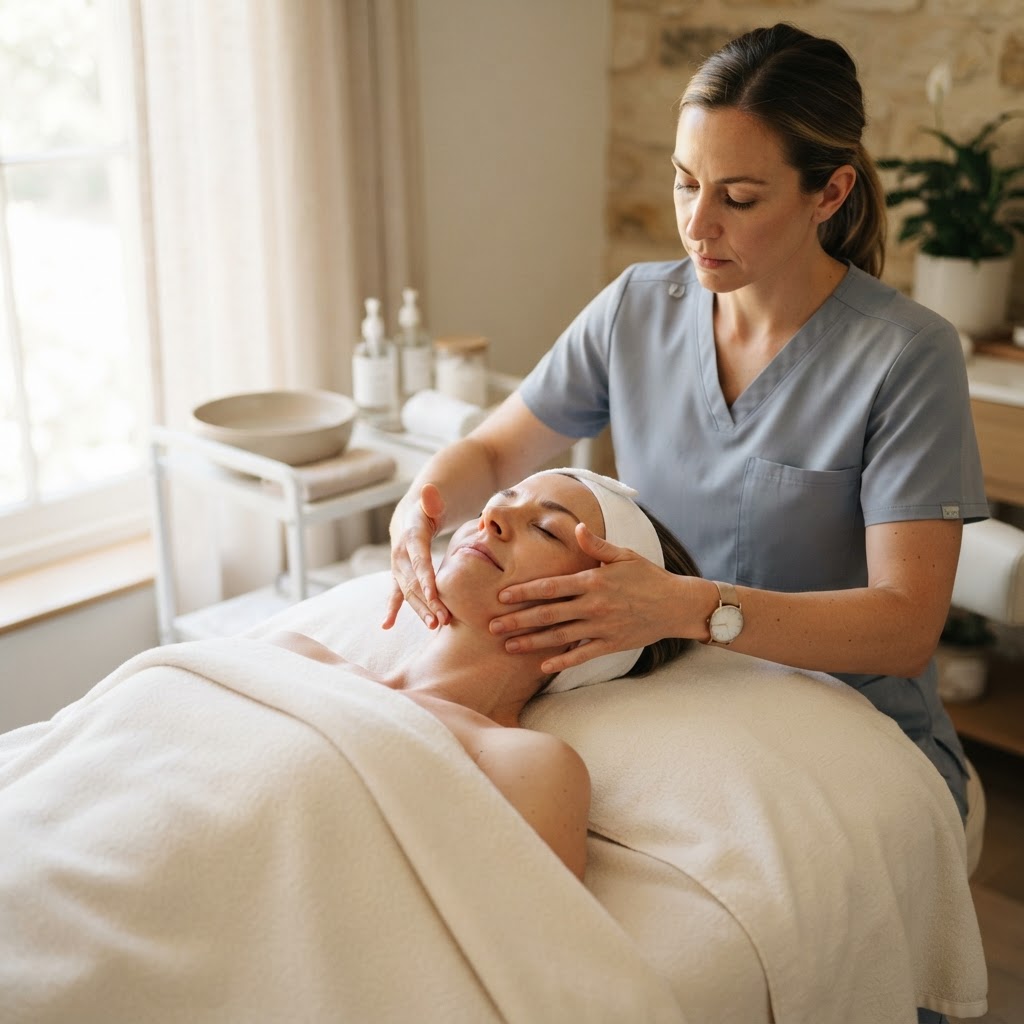
Retaining clients in today's competitive beauty market requires more than delivering a pleasant experience — it demands consistently exceptional, results-driven treatments that clients simply cannot replicate at home. Lymphatic drainage massage for facials has emerged as one of the most powerful service additions available to skincare professionals, combining visible, immediate results with long-term skin health benefits. For UK salon owners and spa managers looking to increase booking frequency and build a loyal client base, understanding and integrating this technique is no longer optional — it is a genuine business advantage.
What Is Lymphatic Drainage Massage and Why Does It Matter for Facials?
Lymphatic drainage massage is a specialised, gentle massage technique designed to stimulate the lymphatic system, encouraging the natural movement of lymph fluid away from tissues and towards the lymph nodes. In a facial context, this translates to reduced puffiness, improved skin clarity, and a more sculpted, lifted appearance — results that clients notice immediately upon leaving the treatment room. The technique uses light, rhythmic strokes and precise directional pressure applied along specific lymphatic pathways of the face, neck, and décolletage.
The lymphatic system plays a critical role in immune function and waste removal, yet it lacks its own pumping mechanism, relying entirely on muscle movement and manual stimulation to function efficiently. When lymph flow becomes sluggish — due to sedentary lifestyles, stress, poor diet, or simply the natural ageing process — fluid accumulates in facial tissues, contributing to puffiness, dullness, and a loss of definition. By incorporating manual lymphatic drainage (MLD) techniques into professional facials, therapists directly address these concerns at a physiological level rather than simply masking symptoms.
For skincare therapists, this matters enormously because it elevates the entire facial from a surface-level treatment to a genuinely therapeutic experience. Clients who understand the science behind what their therapist is doing — and who can see and feel the difference — are significantly more likely to rebook and to invest in a course of treatments. It transforms a one-off appointment into an ongoing wellness ritual.
The Business Case for Adding Lymphatic Drainage to Your Facial Menu
Increasing Treatment Value and Price Point
One of the most immediate commercial benefits of offering lymphatic drainage facial massage is the ability to justify a higher price point. Clients are increasingly sophisticated and are willing to invest in treatments that deliver measurable, visible results. By training your team in lymphatic drainage techniques and communicating the benefits clearly — both in your marketing and during the consultation — you create a compelling reason for clients to choose your salon over a competitor offering a standard facial at a lower price.
Adding lymphatic drainage as an enhanced facial upgrade or as a standalone add-on service allows you to structure your menu strategically. Many salons successfully charge a premium of £15 to £30 for the lymphatic drainage element alone, which, over a full column of bookings, represents a meaningful increase in revenue without significant additional product cost. When paired with high-performance professional skincare ranges, the perceived and actual value of the treatment increases further.
Expert Tip: Offer a complimentary lymphatic drainage upgrade during a client's first visit to a new facial protocol. Experiencing the results first-hand is the most persuasive sales tool available, and it creates a natural reason to recommend a course of treatments.
Driving Rebooking and Treatment Courses
Client retention is the cornerstone of a sustainable beauty business, and lymphatic drainage massage is uniquely positioned to support it. Because optimal results are achieved through a series of regular treatments — typically recommended every two to four weeks — the technique naturally encourages clients to commit to a course rather than booking sporadically. This regularity is the foundation of strong retention figures and predictable monthly revenue.
Educating clients about the cumulative benefits of regular lymphatic drainage is an essential part of the consultation and post-treatment conversation. Explain that whilst a single session delivers visible results, consistent treatment supports long-term improvements in skin tone, reduction of chronic puffiness, and enhanced absorption of active skincare ingredients. When clients understand that each session builds upon the last, the motivation to rebook becomes intrinsic rather than dependent on promotional incentives.
Mastering the Technique: Key Principles for Skincare Therapists
Understanding Lymphatic Anatomy in the Facial Context
Effective lymphatic drainage massage for facials requires a solid understanding of the lymphatic anatomy of the head and neck. The key drainage pathways in this region flow from the central face outwards and downwards towards the submandibular, cervical, and supraclavicular lymph nodes. Therapists must learn to follow these pathways precisely, as incorrect pressure or direction can be counterproductive and potentially uncomfortable for the client.
Key anatomical points to understand include:
- Submandibular nodes — located beneath the jaw, these drain the central face, lips, and gums
- Parotid nodes — situated near the ear, draining the temporal region and lateral face
- Occipital nodes — at the base of the skull, draining the posterior scalp
- Anterior and posterior cervical chains — running along the neck, these form the main drainage channels for the entire facial region
- Supraclavicular nodes — the terminal drainage point, located just above the clavicle
Always begin and end the lymphatic sequence at the neck and décolletage to ensure the drainage pathways are open and clear before working on the face itself. This is a fundamental principle that distinguishes a clinically informed approach from a superficial one.
Pressure, Rhythm, and Technique Essentials
The hallmark of effective manual lymphatic drainage is exceptionally light pressure — far lighter than clients or even therapists might initially expect. The lymphatic capillaries in the skin sit just beneath the surface, and deep pressure bypasses them entirely, stimulating blood circulation instead. The correct pressure is often described as the weight of a ten-pence coin, with slow, rhythmic strokes that gently stretch the skin in the direction of lymph flow.
Key technique principles to practise and teach include:
- Stationary circles — gentle, rotating movements that stretch the skin without sliding over it
- Pump technique — an oval-shaped pumping motion used at lymph node sites to stimulate drainage
- Scoop technique — a scooping, wave-like stroke used along limbs and the neck to move fluid along vessels
- Maintaining rhythm — consistent, unhurried strokes of approximately one second per movement encourage the parasympathetic response and deepen relaxation
Expert Tip: Encourage your therapists to practise lymphatic sequences on themselves first. Feeling the technique from the client's perspective builds empathy and helps identify areas where pressure or rhythm needs refinement.
Integrating Lymphatic Drainage into a Full Facial Protocol
The most effective approach is to weave lymphatic drainage sequences throughout the facial rather than adding them as a single isolated step. Begin with a lymphatic warm-up during the cleanse and prepare phase, working the neck and décolletage to open drainage channels. Follow with your chosen active treatment products — serums, treatment masks, and professional ampoules — and incorporate lymphatic strokes during application to maximise absorption of key ingredients.
A well-structured lymphatic facial protocol might include:
- Pre-cleanse: Neck and décolletage lymphatic warm-up (3–5 minutes)
- Post-cleanse: Gentle lymphatic strokes across the face to prepare skin
- Serum application: Lymphatic effleurage to drive active ingredients into skin
- Massage step: Full lymphatic drainage sequence including facial sculpting (10–15 minutes)
- Mask stage: Light lymphatic holds to maintain drainage during mask processing
- Finishing: Closing lymphatic sequence to consolidate results
This integrated approach ensures that the lymphatic work enhances every phase of the treatment rather than functioning as a disconnected add-on.
Choosing the Right Products to Support Lymphatic Drainage Facials
The efficacy of lymphatic drainage massage for facials is significantly amplified when paired with the right professional skincare products. The improved circulation and enhanced absorption that follow lymphatic work create an optimal window in which active ingredients can penetrate more deeply and perform more effectively. This makes product selection a critical component of your treatment outcomes.
Look for professional formulations that support the skin's natural detoxification and renewal processes — antioxidant-rich serums, hydrating hyaluronic preparations, and brightening actives all deliver enhanced results when applied during or immediately following lymphatic sequences. MONUSKIN Professional Skincare offers a curated range of professional treatment products formulated specifically for use within salon and spa environments, providing therapists with the performance-driven actives needed to complement and elevate lymphatic facial protocols.
MONUSKIN's professional starter packs are particularly well suited to therapists building a new facial menu around lymphatic drainage, offering a cohesive product system that covers cleansing, treatment, and finishing steps. Using a cohesive product range also simplifies retail recommendations, as clients who experience results in the treatment room are naturally motivated to maintain those results at home with the same trusted formulations.
Training Your Team and Communicating the Benefits
Investing in CPD and Technique Refinement
For salon owners and spa managers, the return on investment in lymphatic drainage training is substantial. Whether through formal CPD courses, masterclasses, or in-house training programmes, equipping your team with the knowledge and confidence to deliver exceptional lymphatic facials directly impacts client satisfaction scores and rebooking rates. Prioritise training that covers both the technical anatomy and the communication skills needed to explain the treatment to clients in an accessible, compelling way.
Encourage your therapists to view lymphatic drainage not as an add-on technique but as a core professional competency. The more fluent and confident they are in both the application and the explanation of the technique, the more effectively they can position it as an essential rather than an optional part of a client's skincare journey. Well-trained therapists are also more likely to identify contraindications appropriately, ensuring the safety and wellbeing of every client.
Client Education as a Retention Strategy
Educating clients about the lymphatic system and facial health is one of the most underutilised retention tools in the beauty industry. When clients understand why their skin looks puffy in the morning, why stress affects their complexion, or why their skin responds differently at different points in their hormonal cycle, they begin to see their therapist as a trusted health and wellness adviser rather than simply a service provider. This shift in perception is profoundly powerful for loyalty.
Use consultation cards, treatment menus, and post-treatment cards to reinforce the education your therapists provide verbally. Consider creating a simple, branded guide to lymphatic skin health that clients can take away — this positions your salon as a knowledgeable, professional environment and keeps your brand visible between appointments.
Partner with MONUSKIN to Build Your Lymphatic Facial Offering
If you are ready to elevate your facial menu, increase client retention, and differentiate your salon with results-driven lymphatic drainage treatments, MONUSKIN Professional Skincare is the ideal partner for that journey. Our professional product range is designed to work in harmony with advanced facial techniques, delivering the active performance your clients expect and the reliability your therapists need.
Explore our professional starter packs, designed to give salon owners and therapists everything required to launch a premium lymphatic facial treatment with confidence. With dedicated support, professional formulations, and a brand built on expertise and integrity, MONUSKIN is committed to helping your business grow.
Contact the MONUSKIN team today to discuss your salon's needs, request product samples, or find out more about our professional partnership programme. Your clients are ready for results-driven facials — and MONUSKIN is ready to help you deliver them.