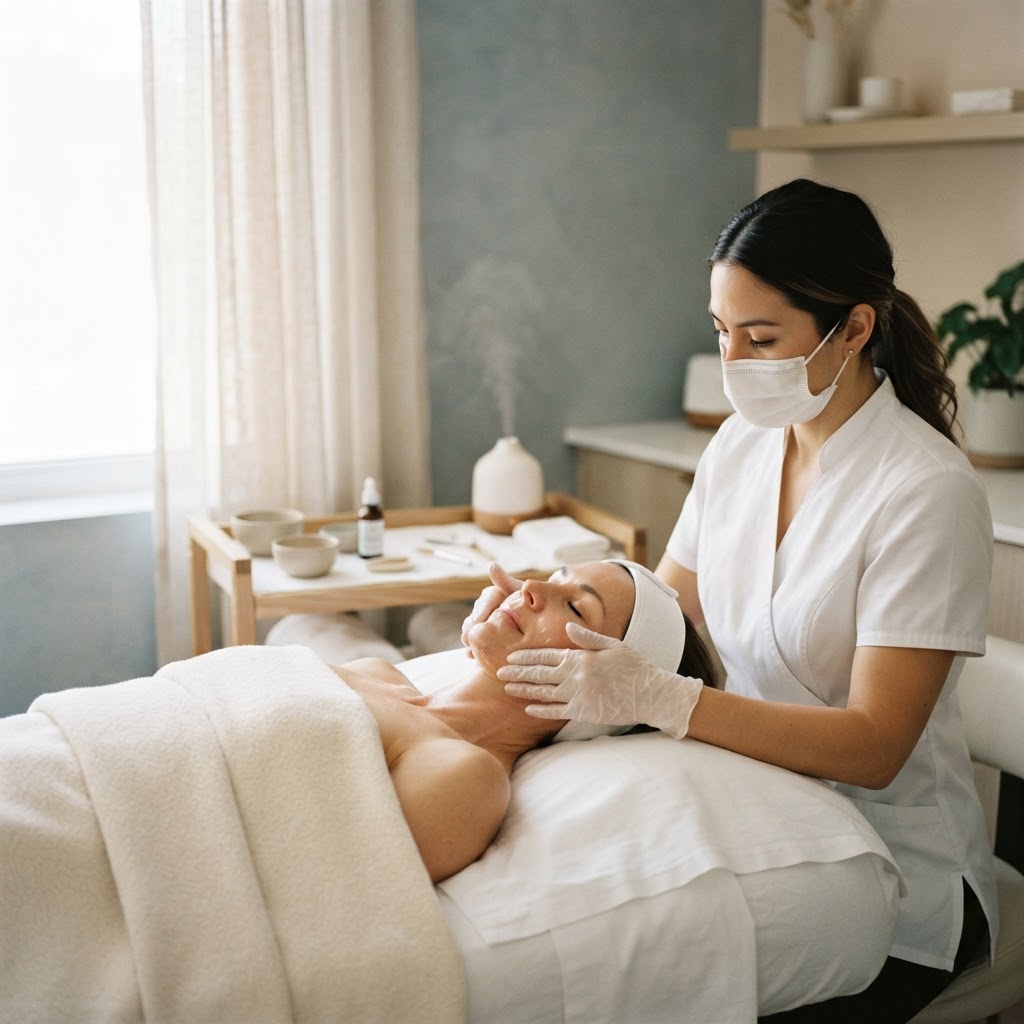
The Science of Bio-Active Peptides: Boosting Client Retention in Professional Treatments
In today's competitive beauty industry, clients are increasingly informed, discerning, and results-driven. They no longer simply want a relaxing facial — they want measurable, visible improvements to their skin. For salon owners, spa managers, and skincare therapists across the UK, this shift in client expectation represents both a challenge and a significant commercial opportunity. Bio-active peptides for professional skincare have emerged as one of the most powerful tools available to practitioners seeking to deliver genuinely transformative results. Understanding the science behind these remarkable ingredients is no longer optional — it is essential to building a loyal, returning client base.
What Are Bio-Active Peptides and Why Do They Matter?
Peptides are short chains of amino acids, the fundamental building blocks of proteins. In the context of skincare, bio-active peptides are specifically engineered sequences that communicate with the skin's cellular systems, triggering targeted biological responses. Unlike many cosmetic ingredients that work superficially, bio-active peptides interact directly with dermal receptors, influencing processes such as collagen synthesis, elastin production, and melanin regulation at a deeper structural level.
The term "bio-active" distinguishes these compounds from passive or inert peptide fragments. A bio-active peptide has a defined, measurable physiological function — it does something specific and purposeful within the skin. This precision is what makes them so compelling for professional use. When a therapist applies a treatment enriched with bio-active peptides, they are not simply moisturising the skin; they are initiating a cascade of cellular events that can yield lasting, clinically meaningful change.
For skincare professionals, this distinction matters enormously from a business perspective. Clients who experience genuine, visible improvement in skin texture, firmness, and tone are clients who return. They become advocates, refer friends and family, and invest in homecare products that extend the benefits of their salon treatments. Peptide-powered protocols are, in effect, a client retention strategy as much as a skincare strategy.
The Key Types of Bio-Active Peptides in Professional Skincare
Not all peptides perform the same function, and understanding the different categories allows therapists to build more intelligent, targeted treatment plans for their clients.
Signal Peptides
Signal peptides act as chemical messengers, stimulating the skin's fibroblast cells to increase the production of structural proteins such as collagen, elastin, and hyaluronic acid. The most widely studied example is Matrixyl (palmitoyl pentapeptide-4), which has been shown in clinical studies to significantly improve the appearance of fine lines and wrinkles. These peptides essentially "tell" ageing skin to behave more like younger skin, making them invaluable in anti-ageing treatment protocols.
Carrier Peptides
Carrier peptides are responsible for transporting trace elements — most commonly copper and manganese — deep into the dermal layers where they are needed for enzymatic processes and wound healing. Copper peptides, in particular, have a well-established body of research supporting their role in stimulating collagen production and reducing inflammation. They are particularly effective in post-procedure treatments where skin recovery is a priority.
Neurotransmitter-Inhibiting Peptides
Often referred to as "Botox-like" peptides, these compounds work by blocking the release of acetylcholine at neuromuscular junctions, temporarily relaxing the micro-contractions that lead to expression lines. Argireline (acetyl hexapeptide-3) is the most recognised ingredient in this category. Whilst their effect is more subtle than injectable treatments, when used consistently in professional-grade concentrations, they can visibly soften dynamic wrinkles — a compelling selling point for clients seeking non-invasive alternatives.
Enzyme-Inhibiting Peptides
These peptides work by suppressing the enzymes — such as matrix metalloproteinases (MMPs) — that break down collagen and elastin in the skin. As we age, MMP activity increases significantly, accelerating structural degradation. Incorporating enzyme-inhibiting peptides into treatment protocols helps to preserve existing dermal architecture whilst signal peptides work to rebuild it.
Expert Insight: The most effective professional peptide treatments combine multiple peptide classes in a single protocol. Using signal peptides alongside enzyme inhibitors creates a dual action — rebuilding collagen whilst simultaneously protecting it from degradation. This synergistic approach produces faster, more visible results for clients.
How Bio-Active Peptides Support Long-Term Skin Health
One of the most scientifically compelling aspects of bio-active peptides is their capacity to create cumulative, progressive improvements rather than temporary or superficial results. Unlike exfoliating treatments that provide immediate but short-lived radiance, peptide-based protocols work by gradually rebuilding the skin's underlying infrastructure. With each successive treatment, the benefits compound — fibroblast activity increases, collagen networks become denser, and the skin's natural repair mechanisms are reinvigorated.
This progressive improvement model has profound implications for how therapists should position peptide treatments to their clients. Rather than promising an instant transformation, skilled practitioners educate their clients on the biological timeline of collagen remodelling — typically six to twelve weeks for measurable structural changes to become visible. Clients who understand this science are more likely to commit to a course of treatments, dramatically improving both retention rates and average spend.
Furthermore, bio-active peptides are exceptionally well-tolerated across a wide range of skin types, including sensitive and reactive skin. Unlike retinoids or chemical exfoliants, they do not typically cause irritation, photosensitivity, or barrier disruption. This makes them an ideal active ingredient for therapists working with clients who may have previously been unable to tolerate more aggressive anti-ageing interventions.
Incorporating Bio-Active Peptides Into Your Treatment Menu
Building a commercially successful peptide protocol requires more than simply selecting a product with peptides on the ingredient list. Professional-grade bio-active peptide formulations are formulated with significantly higher concentrations and more sophisticated delivery systems than their retail counterparts — and this distinction is your key selling point as a trained therapist.
When designing or updating your treatment menu, consider the following framework:
- Assess client skin concerns individually — peptide protocols can be tailored to target collagen loss, pigmentation, dehydration, or loss of firmness, depending on the peptide classes used
- Create tiered treatment courses — offering single sessions, courses of six, and monthly maintenance programmes gives clients clear progression pathways and builds predictable recurring revenue
- Integrate complementary technologies — bio-active peptides work synergistically with treatments such as microcurrent, LED phototherapy, and ultrasound, as these modalities enhance transdermal penetration
- Develop a homecare bridge — prescribing supporting peptide serums and moisturisers for home use reinforces treatment outcomes and generates additional retail revenue between appointments
- Document and track results — using skin analysis tools and before-and-after photography provides clients with tangible evidence of progress, strengthening their commitment to continued treatment
Practical Tip: When introducing a new peptide-focused protocol, consider offering a complimentary skin consultation with a course booking. This not only adds perceived value but allows you to perform a thorough skin analysis, set realistic expectations, and establish the outcome benchmarks that will keep clients engaged throughout their treatment journey.
The Business Case: Peptides and Client Retention
The financial argument for integrating bio-active peptides for professional skincare into your business model is compelling. Research consistently demonstrates that acquiring a new client costs significantly more than retaining an existing one — and results-driven treatments are the single most effective retention mechanism available to skincare professionals.
When clients invest in a peptide treatment course and begin to see genuine improvements in their skin's firmness, texture, and luminosity, the psychological commitment to continuing their skincare journey deepens. They begin to associate your salon or spa with expertise and efficacy rather than simply relaxation. This positions your business as a clinical destination, not merely a pampering experience — a distinction that commands premium pricing and long-term loyalty.
Consider the revenue model: a course of six professional peptide treatments, combined with a prescribed homecare routine, represents a significantly higher average client value than a standalone facial. When that client returns for maintenance sessions, refers their friends, and upgrades to more advanced protocols over time, the lifetime value of that client relationship multiplies considerably. This is the commercial power of science-backed skincare.
Why Product Quality Is Non-Negotiable
Not all professional skincare ranges are created equal, and when it comes to bio-active peptides, formulation quality is everything. Peptide stability, concentration, and delivery system determine whether an ingredient performs as the science promises or simply degrades on the shelf. Therapists must therefore be rigorous in evaluating the professional brands they choose to work with.
Key formulation criteria to assess include:
- Peptide concentration — professional formulations should contain therapeutically relevant levels, not merely "cosmetic" trace amounts
- pH compatibility — peptides have optimal activity within specific pH ranges; poorly formulated products may render the ingredient ineffective
- Delivery technology — liposomal encapsulation, micro-emulsification, and other advanced delivery systems significantly enhance dermal penetration
- Ingredient synergy — the most effective formulations combine bio-active peptides with complementary actives such as hyaluronic acid, niacinamide, and growth factors
- Clinical evidence — reputable professional brands will be able to provide clinical study data supporting the efficacy of their formulations
Working with a trusted professional skincare partner who understands the science and provides the education, training, and support to back it up is the foundation of a successful results-driven business model.
Partner With MONUSKIN to Elevate Your Peptide Protocols
MONUSKIN Professional Skincare has been developed specifically for the discerning UK skincare professional, combining rigorous scientific formulation with the practical needs of busy salons and spas. Our bio-active peptide formulations are crafted at professional-grade concentrations, utilising advanced delivery systems that ensure optimal ingredient performance in the treatment room and beyond.
Our professional starter packs are designed to make it straightforward for therapists and salon owners to introduce peptide-powered protocols without complexity or risk. Each pack includes comprehensive training support, treatment protocols, and retail homecare recommendations — everything you need to begin delivering results that retain clients and grow your revenue.
When you partner with MONUSKIN, you gain access to:
- A complete professional skincare system built around bio-active actives, including our peptide-rich treatment serums and masks
- Dedicated business support to help you build your treatment menu, price your services, and market your new protocols
- Ongoing education through training materials, webinars, and technical support from our skincare science team
- Retail-ready homecare products that reinforce your in-salon results and create a seamless, profitable retail offering for your clients
- Flexible starter pack options tailored to businesses of all sizes, from independent therapists to multi-room spa facilities
The future of professional skincare is results-driven, science-backed, and centred on client outcomes. Bio-active peptides are at the heart of that future. We invite you to explore how MONUSKIN can help you harness their extraordinary potential — transforming both your clients' skin and your business performance.
Contact MONUSKIN today to request your professional information pack, explore our starter pack options, and take the first step towards building a peptide-powered treatment menu that keeps clients coming back.