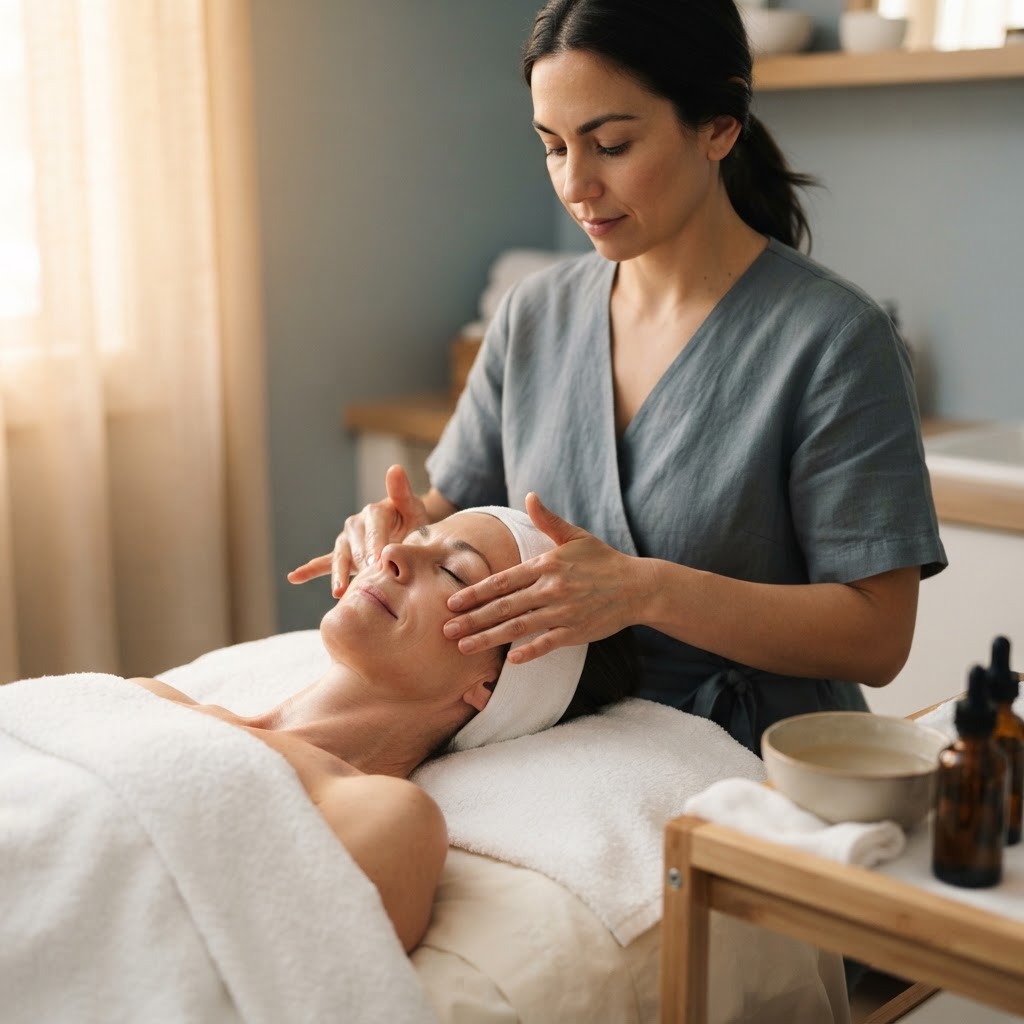
Winter brings with it a familiar challenge for skincare professionals across the UK: clients arriving with tight, flaky, dull complexions and asking why their usual routine simply isn't working anymore. The seasonal shift creates a perfect storm of environmental aggressors — plummeting temperatures, biting winds, and the relentlessly drying effects of indoor central heating. For salon owners, spa managers, and therapists, this represents both a challenge and a significant business opportunity. The key to capitalising on it lies in knowing how to winter-proof your treatment menu before your clients start cancelling appointments in frustration.
Understanding the Winter Skin Barrier Crisis
Before you can effectively address seasonal dehydration in your treatment room, it's essential to understand precisely what's happening at a physiological level. During winter, transepidermal water loss (TEWL) increases dramatically as the skin's natural lipid barrier becomes compromised by cold air, which holds significantly less moisture than warm air. The result is a weakened protective barrier that struggles to retain hydration, leaving skin vulnerable to irritation, sensitivity, and accelerated ageing.
Central heating compounds this problem considerably. While it keeps your clients comfortable indoors, it reduces indoor humidity levels to as low as 10–20%, far below the 40–60% that skin needs to function optimally. This creates a cycle of dehydration that even well-maintained skin finds difficult to break without professional intervention. Understanding this mechanism allows you as a therapist to explain the science to your clients with confidence, reinforcing your expertise and the value of regular treatments.
It's also worth distinguishing between dehydrated skin and dry skin, two conditions that are frequently confused but require different treatment approaches. Dry skin is a skin type defined by insufficient sebum production, whilst dehydrated skin is a condition — one that can affect any skin type, including oily skin — caused by a lack of water in the epidermis. This distinction should inform every consultation you conduct during the winter months and guide your product selection accordingly.
Auditing Your Current Treatment Menu
The first practical step in preparing for the winter season is conducting an honest audit of your existing treatment menu. Ask yourself whether your current offerings genuinely address barrier repair and deep hydration, or whether they simply provide surface-level moisturisation that won't stand up to the rigours of a British winter. Many salons discover that their warm-weather menus lean heavily towards brightening, exfoliation, and oil control — all of which need careful recalibration at this time of year.
When reviewing your menu, consider the treatment journey from start to finish. A client with a compromised barrier should not be receiving aggressive exfoliation or high-percentage active treatments without proper preparation and post-care support. Re-sequencing your treatment steps to prioritise barrier priming and hydration loading before any corrective work will produce far better results and significantly reduce the risk of adverse reactions during the colder months.
Expert Insight: A well-structured winter menu doesn't require you to discard your existing treatments — it requires you to reframe them. Position hydration and barrier repair as essential preparatory phases rather than standalone add-ons, and you'll naturally increase your average treatment time and revenue per client visit.
Consider the following questions when auditing your menu:
- Do you offer a dedicated dehydration facial or hydration-focused treatment pathway?
- Are your retail recommendations aligned with winter skin needs, particularly around barrier-supporting ingredients?
- Do your therapists have the knowledge to identify dehydration versus dryness at consultation stage?
- Are you upselling hydrating boosters or masks as enhancements to existing treatments?
Key Ingredients to Build Your Winter Protocols Around
Knowing which ingredients to prioritise is the foundation of any effective winter treatment strategy. Hyaluronic acid remains the gold standard for hydration, but its efficacy in professional treatments depends heavily on molecular weight and application technique. Low molecular weight hyaluronic acid penetrates deeper into the epidermis, whilst high molecular weight variants sit on the surface, forming a protective film that reduces TEWL. Using both in combination, as part of a layered protocol, delivers the most comprehensive results.
Ceramides are equally critical during winter, as they are the primary lipid components of the skin's barrier and are among the first to be depleted by cold, dry conditions. Incorporating ceramide-rich products into your facial protocols helps to physically rebuild the barrier, sealing in moisture and protecting the skin from further environmental damage. When combined with fatty acids and cholesterol, ceramides form a complete barrier-repair complex that professional treatments should aspire to replicate.
Other ingredients worth building your winter protocols around include:
- Squalane — a lightweight, skin-identical emollient that reinforces the barrier without congesting pores
- Niacinamide — supports ceramide synthesis and reduces sensitivity, making it ideal for reactive winter skin
- Beta-glucan — a powerful hydrator with soothing and immunomodulatory properties, particularly effective on sensitised skin
- Panthenol (Vitamin B5) — promotes water retention and accelerates barrier repair, suitable for all skin types
- Glycerin — a highly effective humectant that draws moisture from the atmosphere and deeper skin layers into the epidermis
MONUSKIN's professional formulations are built around clinically active concentrations of these key ingredients, ensuring that your treatments deliver measurable, visible results that clients can genuinely feel the difference in — even after just a single session.
Structuring a Winter Facial Protocol
A well-designed winter facial protocol should follow a logical, science-backed sequence that prioritises the skin's physiological needs. Begin every treatment with a thorough skin analysis and consultation, paying particular attention to signs of compromised barrier function such as redness, tightness, flaking, and increased sensitivity. This information should directly dictate your product selection and technique throughout the treatment.
The cleansing phase in winter should shift towards cream or balm-based cleansers that remove impurities without stripping the skin of its natural oils. Gel and foaming cleansers, whilst appropriate in warmer months, can significantly exacerbate dehydration in compromised winter skin. Follow cleansing with a hydrating toner or essence to begin the layering process, preparing the skin to receive subsequent active ingredients more effectively.
The treatment phase should focus on multi-layered hydration delivery, working from lighter serums through to richer occlusive finishers. If exfoliation is necessary, opt for gentle enzymatic options rather than mechanical or high-percentage acid exfoliants, and always follow with intensive barrier repair. A well-formulated hydrating mask, such as those within the MONUSKIN professional range, provides an excellent mid-treatment step, allowing active ingredients time to absorb whilst delivering a luxurious client experience.
A recommended winter facial structure might look like this:
- Double cleanse with a cream or balm cleanser
- Gentle enzyme exfoliation (only where appropriate following consultation)
- Hydrating toner or essence application
- Hyaluronic acid serum — layered application with light massage
- Professional treatment mask — hydrating or barrier-repair focused
- Eye treatment — address periorbital dehydration specifically
- Moisturiser and SPF — complete the barrier with appropriate protective cover
Educating Your Clients for Between-Visit Results
One of the most valuable services you can provide your clients during winter is education. Many clients genuinely don't understand why their skin behaves differently in colder months, and a brief, well-informed explanation during the treatment or consultation positions you as a trusted expert rather than simply a service provider. Client education drives retail sales, increases rebooking rates, and builds long-term loyalty — all of which directly benefit your business.
Encourage clients to think about their home skincare routine as an extension of their professional treatments. The results achieved in your treatment room will last significantly longer when supported by the right products at home. This is where recommending a curated winter skincare starter pack becomes both commercially sensible and genuinely beneficial for the client. MONUSKIN's retail starter packs are designed to complement professional treatments, giving clients everything they need to maintain their skin barrier between appointments without the overwhelm of building a routine from scratch.
Pro Tip: Create a simple winter skin checklist that your therapists can hand to clients post-treatment. Include reminders to use a humidifier at home, apply moisturiser to damp skin, and switch to a richer overnight product during the coldest months. Small, actionable advice like this demonstrates your ongoing commitment to their skin health beyond the treatment room.
Lifestyle factors are also worth addressing with clients during winter consultations:
- Hydration from within — encourage adequate water intake, which many clients reduce during winter
- Indoor heating — suggest a bedroom humidifier to offset the drying effects overnight
- Hot showers and baths — advise clients to reduce temperature and keep bathing time shorter to prevent barrier stripping
- Dietary support — omega-3 rich foods support skin lipid production and barrier integrity
Building Winter Revenue Through Menu Additions and Retail
Winter is not a slow season for skilled skincare professionals — it is a premium revenue opportunity for those who position themselves correctly. Targeted seasonal promotions, treatment upgrades, and curated retail bundles allow you to increase your average client spend whilst genuinely serving their skin's elevated needs. Consider introducing a winter skin SOS package that combines a professional barrier repair facial with a take-home retail starter kit, presented as a complete solution rather than separate purchases.
Course bookings are another powerful tool during the winter months. Dehydration and barrier damage don't resolve after a single treatment — they require consistent professional intervention alongside a disciplined home routine. Offering a course of three or four winter barrier treatments at a slight discount encourages commitment, improves client results, and provides you with guaranteed revenue across the colder quarter. Frame these as a seasonal investment rather than a luxury, particularly given the cumulative impact of winter on skin health.
Retail displays should be refreshed at the start of the season to reflect winter priorities. Position hydrating serums, barrier creams, and overnight treatments prominently, and train your team to discuss these products naturally within the context of the treatment rather than as an afterthought at reception. MONUSKIN's professional starter packs make this process straightforward, providing a ready-curated selection of products that align with your treatment protocols and give clients a clear, accessible entry point into a consistent routine.
Partner with MONUSKIN to Elevate Your Winter Offering
If you're ready to winter-proof your treatment menu with professional-grade formulations that deliver real, measurable results, MONUSKIN is the partner your business needs. Our range has been developed with working skincare professionals in mind — efficacious, clinically informed, and designed to support both outstanding treatment outcomes and a thriving retail business.
From our professional treatment ranges formulated around barrier-repair and advanced hydration science, to our thoughtfully curated starter packs that make it easy for your clients to maintain results at home, MONUSKIN provides everything you need to position your salon or spa as the go-to destination for winter skin expertise in your area.
Join the MONUSKIN professional community today and gain access to product training, treatment protocol support, and a dedicated account team committed to helping your business grow — whatever the season. Get in touch with us to discuss your treatment menu, explore our professional starter packs, and discover how MONUSKIN can help you turn the coldest months of the year into your most successful.