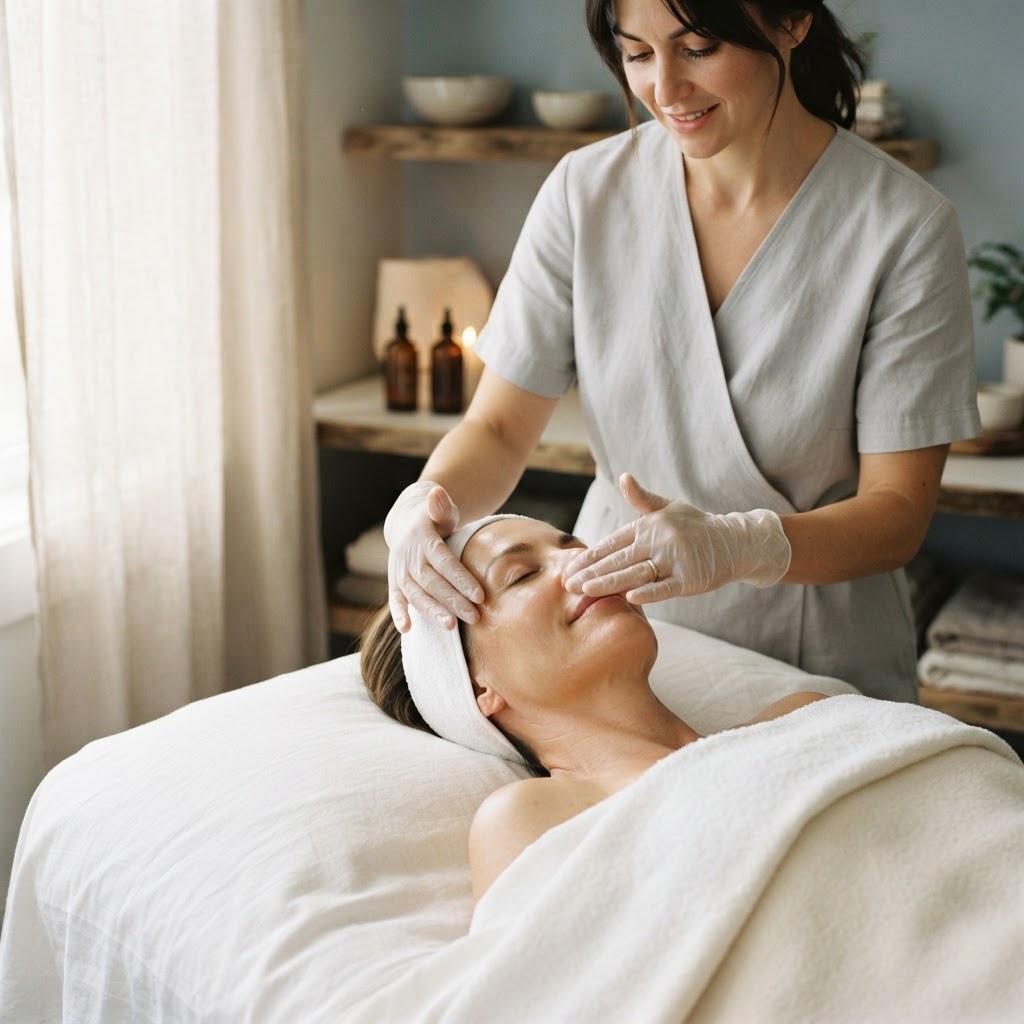
Maximising Salon Retail Sales: A Guide to Professional Skincare Consultations
Retail sales remain one of the most underutilised revenue streams in the UK beauty industry. Many talented therapists feel uncomfortable recommending products, fearing they will come across as pushy or sales-driven. Yet the reality is quite the opposite — a well-executed skincare consultation positions you as a trusted expert and gives your clients the tools to maintain their results at home. Developing a confident, consistent salon retail sales strategy is not about selling; it is about extending the care you provide beyond the treatment room.
The gap between a salon that struggles with retail and one that thrives often comes down to process, confidence, and product knowledge. When these three elements align, recommending homecare becomes a natural and valued part of every appointment. This guide is designed to help salon owners, spa managers, and skincare therapists build that foundation — systematically and sustainably.
Why Retail Sales Matter More Than You Think
The Revenue You Are Leaving on the Table
It is widely cited within the professional beauty industry that retail should account for roughly 30–40% of a salon's total revenue. For most UK salons, the actual figure sits far below this benchmark. The shortfall represents not just lost income, but missed opportunities to deepen client relationships and improve treatment outcomes. When clients use professionally recommended products at home, they see better results — and better results mean stronger loyalty and more frequent bookings.
Consider the lifetime value of a single client who purchases a homecare routine from you. If she spends £60 on retail products every six to eight weeks alongside her regular facials, that client is worth significantly more annually than one who books treatments alone. Scaling this across your entire client base reveals the true transformative potential of a robust salon retail sales strategy. The numbers make a compelling case for investing time in your consultation process.
Retail also provides a degree of income stability that services alone cannot. Treatment bookings fluctuate with seasons, holidays, and economic pressures. A well-stocked retail offering — supported by knowledgeable staff — creates a secondary revenue channel that can cushion quieter periods. It also gives clients a reason to visit or contact the salon even when they are not booking a treatment.
Building Client Trust Through Expert Guidance
Clients are bombarded with skincare advice from social media influencers, high street brands, and online retailers. What they cannot easily find elsewhere is personalised, professional guidance from someone who has assessed their skin in person. This is your competitive advantage. By positioning retail recommendations within a thorough consultation, you elevate the experience from transactional to genuinely valuable.
When a client understands why a particular product has been chosen for her specific concerns — whether that is dehydration, sensitivity, pigmentation, or premature ageing — she is far more likely to invest in it. She is also far more likely to return and report back on her progress. This creates a consultative relationship that high street beauty counters and online retailers simply cannot replicate.
The Anatomy of an Effective Skincare Consultation
Setting the Scene for Success
A professional skincare consultation should feel like a conversation, not a questionnaire. Begin every consultation in a calm, unhurried environment where the client feels comfortable discussing her skin concerns openly. The physical environment matters — good lighting, a clean consultation area, and professional tools such as a magnifying lamp all signal expertise and attention to detail. First impressions shape the client's confidence in your recommendations before you have even spoken.
Start by listening more than you speak. Ask open-ended questions that invite the client to share her history, daily routine, lifestyle factors, and key concerns. Questions such as "How does your skin feel throughout the day?" or "What is the one thing you would most like to change about your skin?" reveal far more than a standard intake form. Active listening builds rapport and ensures your recommendations are genuinely tailored rather than generic.
Document everything carefully. A well-maintained client record card is invaluable for tracking skin changes over time and demonstrating the progress your recommended routine has delivered. When a client can see measurable improvement linked to the products you prescribed, your credibility — and her trust in your retail advice — grows substantially.
Skin Analysis: The Foundation of Every Recommendation
No retail recommendation should ever be made without a thorough skin analysis. Whether you use visual assessment, touch, professional analysis tools, or a combination of methods, this step is non-negotiable. Skin analysis separates professional advice from guesswork and is the single most powerful justification for why your recommendations differ from what a client might pick up at a chemist.
During analysis, note the skin type, hydration levels, texture, sensitivity, visible congestion, tone evenness, and any lifestyle-related concerns such as stress or sun damage. Cross-reference your findings with the client's self-reported concerns — sometimes clients focus on a symptom (such as oiliness) when the underlying cause is actually dehydration. Identifying this distinction and explaining it clearly demonstrates exactly the kind of expertise that earns long-term client loyalty.
Expert Insight: The consultation is not a preamble to the treatment — it is part of the treatment. Clients who feel genuinely assessed and understood are statistically more likely to purchase retail products and return for follow-up appointments.
Presenting Products With Confidence and Integrity
Moving From Analysis to Recommendation
Once you have completed your skin analysis, the transition to product recommendation should feel seamless. Avoid presenting a long list of products all at once, which can feel overwhelming and sales-driven. Instead, prioritise two or three key recommendations that address the client's primary concerns, explaining the specific role each product plays in her skin's health.
Use the products during the treatment wherever possible. When a client experiences the texture, scent, and immediate effect of a product on her skin, the recommendation becomes experiential rather than theoretical. This approach is particularly effective with ranges like MONUSKIN, where the professional formulations are designed to deliver noticeable, immediate results alongside longer-term benefits. Letting the product speak for itself removes much of the pressure from the recommendation.
Frame every recommendation in terms of the client's goals, not the product's features. Rather than saying "This serum contains hyaluronic acid," say "This is what will help your skin hold onto moisture throughout the day, which will address that tight, uncomfortable feeling you mentioned." Benefit-led language resonates emotionally and connects the product to a solution the client genuinely wants.
Handling Hesitation Without Pressure
Client hesitation is normal and should be respected, not overcome through pressure tactics. If a client expresses concern about cost, acknowledge it genuinely and suggest starting with the single most impactful product for her skin rather than a full routine. A small, confident first purchase is far more valuable than a reluctant large one — it builds trust, allows the client to experience results, and naturally leads to future purchases.
Consider offering a take-home sample or a mini consultation card summarising your recommendations. This gives the client something tangible to leave with, even if she does not purchase on the day, and keeps your recommendations front of mind. Many clients who do not purchase immediately will return or make a phone purchase once they have had time to consider. Following up with a brief, personalised message after the appointment reinforces your commitment to her skin journey.
- Always focus on solving a problem rather than selling a product
- Recommend a maximum of three products per consultation to avoid overwhelm
- Use products during treatments to create a sensory connection
- Offer to build a routine progressively over multiple appointments
- Follow up after the appointment to check in on the client's experience
Training Your Team to Sell With Confidence
Creating a Retail-Positive Salon Culture
A salon retail sales strategy only works when the entire team is aligned and confident. If some therapists recommend retail enthusiastically whilst others avoid it entirely, the client experience becomes inconsistent and overall sales suffer. Retail education should be a regular feature of your team training, not a one-off event. Monthly product knowledge sessions, role-play consultations, and shared success stories all contribute to a culture where recommending homecare feels natural and rewarding.
Incentive structures can also play a meaningful role in motivating the team. Retail commission, team challenges, and recognition for strong performers are all legitimate tools for building enthusiasm. However, the most sustainable motivation is a genuine belief in the products being recommended. When therapists personally use and love a product range, their recommendations carry authentic conviction that clients can sense immediately.
Practical Tip: Assign each team member a "product of the month" to focus on mastering and recommending. Depth of knowledge on fewer products outperforms surface-level familiarity with an entire range.
Product Knowledge as a Professional Standard
Investing in product knowledge is investing in professional credibility. Therapists who can speak fluently about ingredients, formulations, and the science behind a product's benefits command far greater client confidence than those who rely solely on marketing language. Encourage your team to study the professional literature provided by your skincare brand, attend supplier training events, and experiment with products on their own skin.
MONUSKIN provides comprehensive professional training and support materials to help salons build this knowledge base efficiently. Their starter packs are specifically designed to give therapists hands-on experience with the range quickly, making it easier for new stockists to build confidence from day one. Accessible, well-structured brand training removes one of the most common barriers to retail success — not knowing the range well enough to speak about it naturally.
Structuring Your Retail Environment for Maximum Impact
Visual Merchandising and Product Placement
The physical presentation of your retail products communicates as much as your verbal recommendations. A cluttered, dusty shelf undermines the professional credibility you have built during the consultation. Clean, well-lit displays with clear product groupings — organised by skin concern or routine step rather than simply by product type — help clients navigate your offering intuitively.
Point-of-sale materials, retail cards with QR codes linking to product information, and before-and-after imagery from real clients all support the consultation by giving clients visual and informational anchors. Position your retail display in a location that clients naturally pass or sit near — the reception area, the post-treatment relaxation space, or the consultation zone itself. Visibility drives awareness, and awareness is the first step in the purchase journey.
- Group products by skin concern for easier client navigation
- Ensure displays are always clean, fully stocked, and well-lit
- Use professional product cards or consultation takeaways
- Position retail near natural dwell points in the client journey
- Refresh displays seasonally to maintain client interest
Partner With MONUSKIN to Elevate Your Retail Strategy
If you are serious about building a profitable and professional salon retail sales strategy, the skincare brand you partner with makes an enormous difference. MONUSKIN Professional Skincare offers UK salons and spas a sophisticated, results-driven range backed by professional training, business support, and thoughtfully designed starter packs that make launching your retail offering straightforward from day one.
MONUSKIN's formulations are developed with the working therapist in mind — products that perform visibly during treatments, translate seamlessly into homecare routines, and give clients genuine reasons to return. The brand's commitment to professional education means your team will have the product knowledge and confidence they need to recommend with authenticity and integrity. This is not simply a product supplier relationship; it is a business growth partnership.
Whether you are building your retail offering from scratch or looking to refresh an underperforming range, MONUSKIN provides the tools, training, and professional credibility to help you succeed. Take the first step today — explore the MONUSKIN professional range, request a starter pack, and discover how the right skincare partnership can transform your salon's retail revenue and client relationships alike. Your clients deserve expert homecare guidance, and your business deserves the income that comes with providing it.