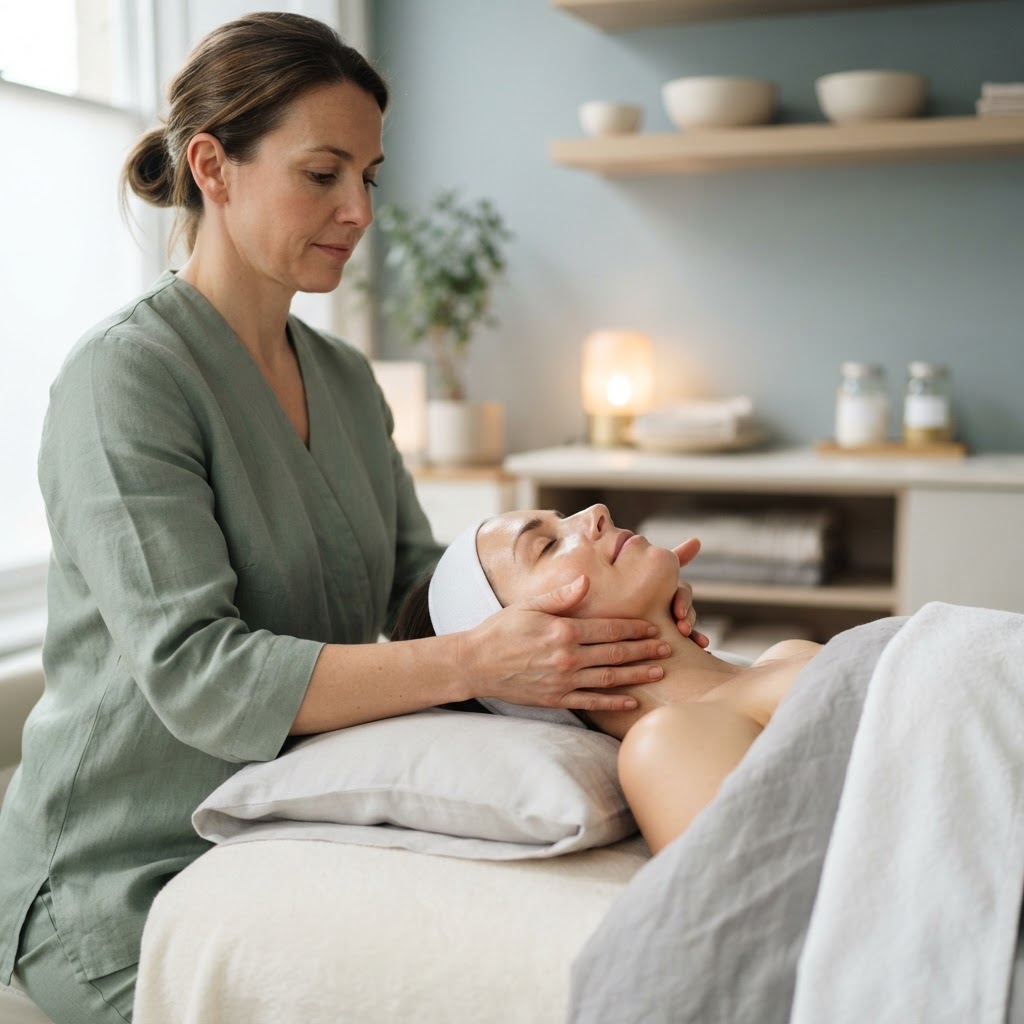
Manual lymphatic drainage has long been celebrated in clinical and wellness settings, but its application within professional facial treatments is experiencing a remarkable renaissance. As clients become increasingly informed about skincare science, they are seeking treatments that go beyond surface-level results. For therapists looking to differentiate their services and deliver genuinely transformative outcomes, mastering manual lymphatic drainage techniques is no longer optional — it is essential.
Understanding the Lymphatic System and Its Role in Skin Health
The lymphatic system is a vast network of vessels, nodes, and organs that works quietly beneath the surface to maintain the body's fluid balance, support immune function, and remove cellular waste. Unlike the cardiovascular system, the lymphatic system has no central pump. It relies entirely on muscle movement, breathing, and — critically for therapists — skilled manual manipulation to keep fluid moving efficiently.
When lymphatic flow becomes sluggish, the effects are visible on the skin. Puffiness, particularly around the eyes and jawline, a dull or congested complexion, and a general lack of tone can all be attributed in part to poor lymphatic drainage. Clients who have recently undergone cosmetic procedures, experienced high levels of stress, or simply lead sedentary lifestyles are especially prone to these concerns. Understanding this physiological context allows therapists to position manual lymphatic drainage not as a luxury add-on, but as a clinically informed response to real skin conditions.
It is also worth noting that the skin of the face contains a particularly dense concentration of lymphatic capillaries. This makes facial lymphatic work both highly effective and highly sensitive. Therapists must approach these techniques with precision, using light, rhythmic pressure rather than the deeper strokes associated with body massage. Getting the pressure right is one of the most important — and most commonly misunderstood — aspects of this discipline.
The Science Behind Post-Facial Radiance
The concept of "post-facial radiance" is something clients frequently request but may struggle to articulate. What they are describing is a complexion that appears luminous, lifted, and refreshed — the kind of glow that suggests the skin is functioning optimally. Manual lymphatic drainage techniques contribute directly to this outcome through several measurable mechanisms.
Firstly, by accelerating the removal of metabolic waste and excess interstitial fluid, drainage work reduces the congestion that makes skin look dull and tired. Secondly, improved lymphatic flow supports better microcirculation, bringing fresh, oxygenated blood closer to the surface of the skin. The result is that characteristic pink, healthy flush that clients associate with a truly excellent facial. Thirdly, reducing oedema — even mild subclinical oedema — has an immediate lifting and contouring effect on facial features.
From a product absorption perspective, lymphatic drainage also prepares the skin beautifully. When excess fluid and cellular debris are cleared, active ingredients in serums and moisturisers have better access to the deeper layers of the epidermis. This means that incorporating drainage techniques before applying key treatment products can significantly enhance their efficacy — a point that should absolutely be communicated to clients during the consultation process.
Expert Insight: Research in dermatology consistently shows that even five to ten minutes of correctly applied manual lymphatic drainage can produce a measurable reduction in facial oedema. The key word is correctly — technique and sequencing matter enormously.
Core Manual Lymphatic Drainage Techniques for the Face
Developing confidence in facial lymphatic work requires a solid grounding in the anatomical pathways lymph follows as it drains from the face. Lymph from the forehead, temples, and scalp generally drains towards the pre-auricular and parotid nodes near the ears. Fluid from the cheeks, nose, and upper lip moves towards the submandibular nodes beneath the jaw. The chin and lower lip drain primarily to the submental nodes.
Understanding these pathways is not academic — it directly informs your hand placement and stroke direction at every stage of the treatment. Always work in a sequenced manner, clearing the nodes at the terminus (the base of the neck) before working proximally up the face. This ensures that there is space for fluid to drain into as you mobilise it from the treatment area.
The Stationary Circle Technique
The stationary circle is one of the most foundational movements in manual lymphatic drainage. Using the flat pads of the fingers, the therapist creates a gentle, circular stretching motion on the skin without sliding across the surface. The pressure used should be exceptionally light — often described as equivalent to the weight of a one-pound coin. This technique is particularly effective over lymph nodes themselves, encouraging them to open and receive fluid more efficiently.
When applying stationary circles to the face, focus initially on the cervical chain along the neck, then progress to the pre-auricular nodes in front of the ear, and the submandibular nodes beneath the jaw. Spend at least three to five repetitions on each node group before advancing. Rushing this preparatory phase is a common mistake that significantly reduces the effectiveness of the full treatment sequence.
Pump and Scoop Strokes
Pump strokes involve a gentle forward-and-release motion that mimics the natural peristaltic action of lymphatic vessels. They are ideal for use along the jawline and down the neck, following the path towards the clavicular nodes. Scoop strokes, by contrast, use a cupped hand movement that literally scoops fluid in a particular direction — highly effective across the cheeks and along the forehead.
Both techniques demand rhythmic consistency. The pace should be slow and deliberate — approximately one complete stroke per second — to synchronise with the natural rhythm of lymphatic vessel contraction. Speeding up the pace is a frequent error amongst therapists new to this modality, and it can actually stimulate the sympathetic nervous system rather than the parasympathetic relaxation response that facilitates optimal drainage.
Feather Effleurage for Completion
Feather effleurage — barely-there strokes using the fingertips — is used as both a connecting movement between sequences and a closing technique at the end of the drainage portion of a treatment. It signals to the nervous system that the work is concluding and helps to integrate the lymphatic movement that has been stimulated. Feather effleurage across the forehead, down the temples, and finishing at the neck provides a cohesive, professional finish to the sequence.
Incorporating Lymphatic Drainage into Your Facial Protocols
One of the most practical questions therapists ask is precisely where manual lymphatic drainage fits within a broader facial treatment. The answer depends on the specific protocol, but a widely respected approach is to incorporate drainage at two distinct points: as part of the cleansing and preparatory phase, and again after the application of treatment serums.
During the cleansing phase, gentle lymphatic movements help to decongest the skin before extractions or active treatments, reducing sensitivity and making the skin more receptive. Post-serum application, drainage techniques actively work the product into the skin whilst simultaneously continuing to clear waste — a dual benefit that significantly elevates the client experience and results.
Consider building a dedicated lymphatic drainage facial as a standalone treatment on your menu. This is particularly appealing to clients who:
- Are preparing for or recovering from a special event
- Experience chronic puffiness or a dull, congested complexion
- Are post-procedure clients seeking gentle, results-driven support
- Suffer from sinusitis or tension headaches that manifest in the face
- Are looking for deeply relaxing treatments with visible, immediate results
Pricing a lymphatic drainage facial at a premium tier is entirely justified when therapists can articulate the science and demonstrate the visible results. Client education is your most powerful tool here.
Pro Tip: Always conduct a thorough consultation before performing manual lymphatic drainage. Contraindications include active infection, acute inflammation, congestive heart failure, and certain thyroid conditions. When in doubt, refer to the client's GP.
Choosing the Right Products to Complement Lymphatic Work
The products you apply during and after a lymphatic drainage sequence can make a profound difference to the overall outcome. Lightweight, high-concentration serum formulations are ideal, as they penetrate readily into the skin that has been primed through drainage work. Avoid overly heavy occlusives during the treatment itself, as they can impede the movement of your hands and reduce the precision of your technique.
When selecting a skincare range to support your lymphatic drainage facials, look for products that prioritise bioavailable active ingredients, clean formulations, and professional-grade efficacy. The quality of what you apply post-drainage matters — this is the moment when the skin is most receptive, and it would be counterproductive to apply anything that might provoke reactivity or clog the freshly cleared pathways.
MONUSKIN's professional skincare range has been formulated with exactly this kind of treatment integration in mind. Products designed to work in harmony with manual techniques, delivering measurable results that clients can see and feel from the very first appointment. For therapists looking to build out a lymphatic drainage facial protocol, MONUSKIN's starter packs offer an accessible, professionally curated entry point — providing everything needed to begin offering this treatment with confidence and consistency.
Training, Continued Professional Development, and Confidence
Manual lymphatic drainage is a skill that improves markedly with dedicated practice. Even therapists who have completed formal training will benefit from regular review of their technique, ideally through video assessment or peer observation. The subtleties of pressure, rhythm, and sequencing are difficult to self-evaluate, and small corrections can yield significant improvements in client outcomes.
Seek out CPD courses that are specifically focused on facial lymphatic drainage rather than broader body lymphatic massage. The face requires a distinctly refined approach, and generic training may not address the nuances of facial anatomy and technique with sufficient depth. Professional associations such as the BABTAC and CIBTAC can be useful resources for locating appropriately accredited training.
Building your confidence also comes from tracking and documenting client results. Before-and-after photography (with appropriate consent) is an invaluable professional tool. It allows you to demonstrate progress to clients, refine your protocols, and build a compelling portfolio that supports your marketing efforts.
Elevate Your Practice with MONUSKIN Professional Partnership
If you are ready to position your salon or spa as a destination for genuinely results-driven, science-informed skincare, partnering with MONUSKIN Professional Skincare is the natural next step. Manual lymphatic drainage techniques represent one of the most exciting opportunities in facial therapy today — and pairing expert technique with professional-grade products creates an unbeatable client proposition.
MONUSKIN offers therapists and salon owners access to:
- Professional starter packs designed to help you launch new treatment protocols confidently
- A carefully developed product range that complements advanced facial techniques
- Ongoing support and education for therapists committed to delivering exceptional results
- Formulations built on clean, effective ingredients that clients trust and love
Your clients are looking for treatments that deliver real, visible results alongside a genuinely luxurious experience. By mastering manual lymphatic drainage and integrating MONUSKIN's professional skincare range into your protocols, you can offer precisely that. Reach out to the MONUSKIN team today to explore partnership options, discover the starter pack range, and take the first step towards transforming your facial menu.