Winter brings with it a particular set of challenges for skincare professionals across the UK. As temperatures drop and central heating systems crank up, your salon clients will begin arriving with increasingly compromised skin barriers, dull complexions, and that characteristic tightness that signals deep-seated dehydration. For therapists who take pride in delivering outstanding results, understanding how to adapt your protocols during the colder months is not simply beneficial — it is essential. Professional skincare treatments for dehydrated skin become your most valuable service offering between October and March, and the salons that master this seasonal shift are the ones that retain clients year-round.
Understanding Winter Dehydration: What Is Really Happening to Your Clients' Skin
The Science Behind Seasonal Skin Changes
Winter dehydration is not merely about dryness — it represents a genuine physiological disruption to the skin's natural defence systems. Transepidermal water loss (TEWL) accelerates dramatically when skin is exposed to cold outdoor air followed by the dry, heated environments most of us inhabit during winter. The skin's natural moisturising factors (NMFs) — the water-binding compounds that keep the stratum corneum supple and functional — become depleted far more quickly than the skin can replenish them. This creates a cyclical pattern of tightness, flakiness, and sensitivity that clients often misidentify as a new skin condition rather than a seasonal shift.
The situation is compounded by behavioural changes that accompany colder weather. Clients tend to take hotter showers, which strips the skin's lipid barrier. They may neglect SPF, assuming winter sun poses no risk, when in fact UV-induced dehydration continues throughout the year. Reduced water intake during cooler months also means the skin receives less systemic hydration. As a skincare professional, recognising these contributing factors allows you to have more meaningful, educational conversations with clients during consultations.
It is also worth noting that dehydration and dryness are distinct conditions, though they frequently co-exist in winter. Dryness is a skin type characterised by a lack of sebum production, whereas dehydration is a temporary skin condition caused by insufficient water content within the skin cells. Even naturally oily skin types can present as severely dehydrated during winter, which can catch both clients and less experienced therapists off guard.
Upgrading Your Client Consultation Process for Winter
Asking the Right Questions
Your consultation process should evolve with the seasons. During winter months, introduce specific questions designed to uncover dehydration triggers that your clients may not have connected to their skin concerns. Ask about heating habits at home and in the workplace, water intake, recent long-haul travel (pressurised cabin air is particularly dehydrating), and any changes to their home skincare routine. This level of attentiveness signals professionalism and builds the trust that underpins client loyalty.
A thorough winter consultation should also include a visual and tactile skin assessment that goes beyond a quick glance. Look for fine surface lines that appear when the skin is gently stretched — a hallmark of dehydration rather than ageing. Check for uneven texture, a lacklustre tone, and areas of reactive redness around the nose and cheeks where the barrier is often most compromised. Palpating the skin gently can reveal that characteristic papery quality that even well-moisturised skin presents when it is lacking water content at a cellular level.
Expert Tip: Create a simple seasonal skin health questionnaire that clients complete upon arrival between November and February. Not only does this streamline your consultation, but it also demonstrates that your salon takes a genuinely personalised approach to skincare — a powerful differentiator in a competitive market.
Updating Client Records Seasonally
Many salons treat client record cards as a one-time exercise, completed at the initial consultation and rarely revisited. In reality, seasonal skin reassessment should be a standard part of your professional practice. Update records at the start of each new season, noting changes in skin condition, any new sensitivities, and adjustments made to treatment protocols. This not only protects you professionally but also gives you invaluable data for recommending the right home care products between appointments.
Adapting Your Treatment Protocols for Dehydrated Winter Skin
Adjusting Exfoliation Techniques
Exfoliation remains a cornerstone of professional facial treatments, but winter demands a more considered approach. Over-exfoliation is one of the most common mistakes therapists make during the colder months, particularly when clients request that freshened, polished result they love after a summer peel. However, aggressive exfoliation on a compromised barrier will only exacerbate dehydration, leading to reactive skin and disappointed clients. Shift your focus towards enzyme-based exfoliants and gentle lactic acid formulations, which loosen dead skin cells without stripping essential lipids.
Consider reducing the frequency of exfoliation-heavy treatments for clients who present with significant dehydration, and always follow any exfoliation step with an intensive hydration phase. The goal in winter is to remove the surface congestion that impedes product absorption, then flood the skin with moisture-binding ingredients before the barrier has a chance to react. This sequencing is critical to achieving the visible, lasting results that keep clients coming back.
Key adjustments to your exfoliation approach in winter:
- Switch from granular scrubs to enzymatic or low-acid chemical exfoliants
- Reduce treatment frequency for highly sensitised or dehydrated clients
- Extend the hydration phase of the treatment to compensate for barrier disruption
- Avoid combined exfoliation and extraction sessions on visibly dehydrated skin
- Always apply a barrier-supporting product as the final treatment step
Incorporating Advanced Hydration Techniques
The heart of any effective professional skincare treatment for dehydrated skin in winter is a multi-layered hydration strategy. Begin with humectant-rich serums containing ingredients such as hyaluronic acid, glycerin, and beta-glucan, which draw moisture into the skin from the environment and deeper tissue layers. Follow with an occlusive or emollient-rich moisturiser to seal that hydration in and prevent further TEWL. This layering technique, when performed with professional-grade formulations, delivers a significantly more dramatic result than a client could achieve at home alone.
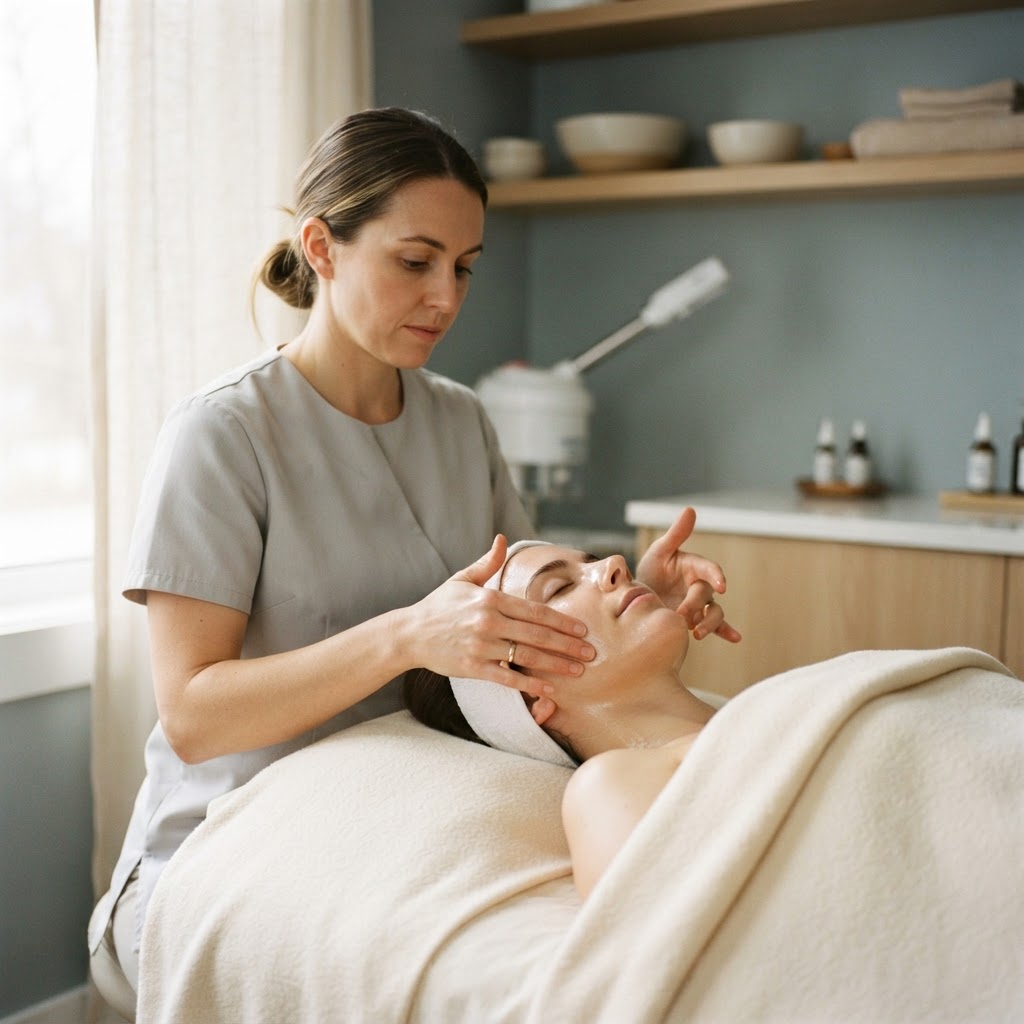
Incorporating facial massage into your winter hydration treatments serves a dual purpose. It stimulates microcirculation, bringing oxygen and nutrients to the skin cells, while also enhancing the absorption of the active ingredients you have applied. A well-executed facial massage on dehydrated skin can produce a visible transformation within a single session — the kind of immediate result that prompts clients to rebook on the spot. Train your team to view massage not as a luxury add-on but as an integral therapeutic component of winter treatments.
Sheet masks and hydrogel masks have a particularly powerful role to play in professional winter treatments. Applied mid-treatment after serums and left in place for ten to fifteen minutes, they create an occlusive environment that drives active ingredients deeper into the skin. The professional versions of these products, available through trusted brands such as MONUSKIN, contain significantly higher concentrations of actives than their retail counterparts, delivering the kind of clinical results that justify the professional treatment price point.
Building a Winter Retail Strategy Around Dehydration
Educating Clients on Home Care
The results of your in-salon treatments will only last as long as your clients support them with an appropriate home care routine. Home care education is not an optional extra — it is a professional responsibility and a significant revenue opportunity. During winter, many clients are unknowingly sabotaging their skin with harsh cleansers, alcohol-containing toners, or simply failing to apply any moisturiser at all. A clear, jargon-free explanation of what dehydration is and how home care products can either support or undermine your treatment work is enormously valuable.
Build simple seasonal home care bundles that address winter dehydration specifically. A well-curated selection of a gentle cleanser, a hyaluronic acid serum, and a rich barrier moisturiser gives clients a clear, manageable routine without overwhelming them with options. MONUSKIN's professional starter packs offer an excellent foundation for building these retail bundles, providing salons with a cohesive range of professionally formulated products that complement in-salon treatments seamlessly.
Recommended home care essentials to retail during winter months:
- Gentle, cream or milk-based cleansers that cleanse without stripping
- Hyaluronic acid serums for daily humectant hydration
- Rich moisturisers containing ceramides, shea butter, or squalane
- Facial oils to support the lipid barrier, particularly overnight
- SPF moisturisers to reinforce the message that UV protection is year-round
Introducing Seasonal Treatment Packages
Winter is an ideal time to introduce seasonal facial packages that clients can commit to over a series of appointments. A course of four to six hydration-focused treatments, booked and paid for in advance, guarantees revenue during what can be a quieter period for some salons while ensuring clients receive the consistent professional care their skin genuinely needs. Package pricing should reflect a modest saving compared to individual treatments — enough to incentivise commitment without undermining your treatment value.
Expert Tip: Position your winter treatment packages as a form of skin investment rather than a promotional discount. Clients who understand the cumulative benefit of regular professional hydration treatments through the colder months are far more likely to continue booking throughout the year.
Staff Training and Treatment Consistency
Ensuring Every Therapist Delivers the Same Standard
In a busy salon or spa environment, treatment consistency across your team is what protects your reputation. Winter protocol updates should be communicated clearly to every member of your therapy team, not simply left to individual interpretation. Hold a brief seasonal training session at the start of autumn where you walk through updated consultation questions, adjusted exfoliation guidelines, and any new products being incorporated into winter treatments. When every therapist delivers the same high standard, clients feel confident booking with anyone on your team — which is crucial for managing busy periods.
Documentation is your greatest ally here. Create written treatment protocols for your winter dehydration facials that include product selection, application techniques, timing, and contraindications. Laminated treatment cards kept in the therapy room remove any ambiguity and ensure that a junior therapist delivers the same core treatment experience as your most senior member of staff. Consistency breeds confidence — both in your team and in your clients.
Partner with MONUSKIN to Elevate Your Winter Treatments
As a UK-based professional skincare brand, MONUSKIN understands the specific challenges that British salons and spas face as the seasons change. Our professional-grade formulations are designed to work in harmony with skilled therapists, delivering the clinical results that discerning clients expect from a premium salon experience. Whether you are looking to refresh your treatment menu, build a compelling retail range, or introduce a cohesive product system to your team, MONUSKIN offers the expertise, training support, and product quality to make that possible.
Our professional starter packs are specifically designed for salon owners and therapists who want to integrate a trusted skincare range without significant upfront investment. They provide everything you need to begin delivering outstanding professional skincare treatments for dehydrated skin immediately, with the backing of a brand that is committed to your success. This winter, do not leave your treatment menu — or your clients — out in the cold.
Get in touch with MONUSKIN today to explore our professional product ranges, seasonal treatment guides, and partnership opportunities. Your clients' skin deserves the best that professional skincare has to offer — and so does your business.